Cultural Exploration
Museums Transform Cultural Exploration
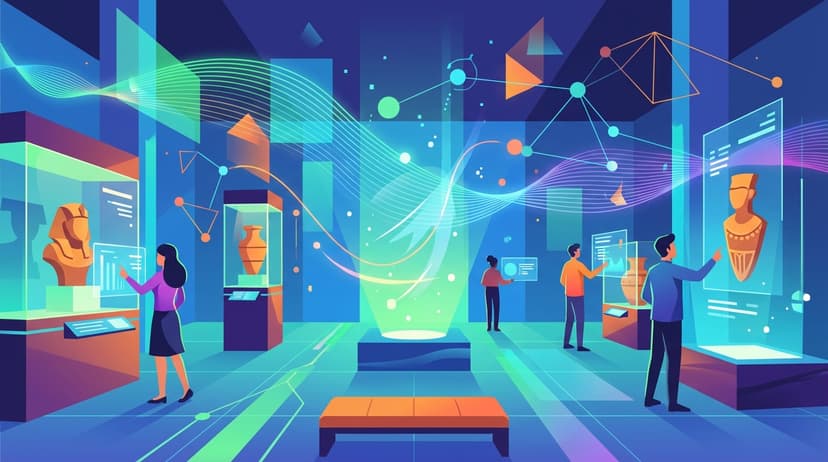
Walk into a museum in 2026 and you might not recognize the place. The hushed halls and "do not touch" signs haven't disappeared entirely, but they're sharing space with motion-sensor installations, VR headsets, and freshly returned artifacts that spent centuries on the wrong continent. Cultural institutions worldwide are caught between two powerful forces: a financial crisis that threatens their survival and a technological and philosophical revolution redefining what a museum can be. Immersive virtual reality experiences. The return of looted artifacts to their homelands. A deepening commitment to community service. The museum sector is navigating one of the most turbulent and exciting periods in its history.
For anyone who explores the world through curiosity, whether solving clues on a city-wide treasure hunt or wandering the halls of a centuries-old gallery, understanding how museums are changing matters. These institutions are no longer passive repositories of the past. They're becoming dynamic platforms for storytelling, justice, and community connection. Here's what that transformation actually looks like.
Explore Our Adventures
All Cities
Key Takeaways
- Immersive technology is turning museums from places where visitors passively observe objects behind glass into interactive environments where they actively participate in storytelling.
- Museum design trends include gamification, large-scale immersive projections that replace static wall labels, and sensor-driven interactivity that lets visitors physically engage with exhibits.
- Repatriation, the process of returning cultural objects to their communities of origin, is no longer a fringe demand and is becoming mainstream museum practice.
- As museums take more visible ethical and political stances, they risk alienating donors, government funders and segments of the public.
- Museum leaders worry that over-emphasis on technology is displacing human interaction, so the challenge is to use technology to enhance rather than replace the human experience of encountering art.
A Sector in Crisis: The Financial Realities Facing Museums
Museums in the United States are under serious financial strain in 2026. Attendance is declining. Funding is being slashed. Programming and public access hang in the balance. And this crisis isn't confined to one country. It reflects a persistent global trend of shrinking public investment in cultural institutions.
Read also: UNESCO Explained Simply
Attendance Has Not Recovered
According to the American Alliance of Museums' (AAM) "2025 Annual Snapshot," based on a survey of 511 museum directors, 55% of U.S. museums report attendance levels that remain below their pre-pandemic 2019 figures. That's actually worse than the previous year, when the figure stood at 49%. AAM President and CEO Marilyn Jackson described the findings as "a sign that recent gains are not holding," signaling significant instability across the sector. Weakened tourism and broader economic uncertainty are driving the decline.
Federal Funding Cuts Bite Deep
The attendance problem is bad enough on its own. Federal funding cuts make it worse. The AAM Snapshot reveals that one-third (34%) of U.S. museums had government grants or contracts canceled in 2025, primarily from agencies including the Institute of Museum and Library Services (IMLS), the National Endowment for the Humanities (NEH), and the National Endowment for the Arts (NEA). The consequences are stark:
- Only 8% of affected museums have been able to fully replace the lost funding, meaning 67% of those institutions are operating without a financial safety net.
- 28% of museums that lost federal funds have reduced public programming.
- 24% have canceled programs specifically designed for students and community groups.
Looking ahead, the AAM survey paints a picture of deep anxiety among museum leaders. According to the report, 63% of U.S. museum directors are concerned about shifts in philanthropy, 53% about inflation, and 52% about broader financial instability heading into 2026.
A Global Pattern
The United States isn't alone in this. A 2025 report from ICOM-IMREC highlights what it calls a "persistent global decline in public funding for museums," a trend pushing institutions worldwide toward self-financing and hybrid revenue models. The era of relying primarily on government support appears to be ending. Museums everywhere are being forced to rethink how they sustain themselves.
The Experiential Boom: Technology Reshapes the Museum Visit
Here's the paradox: even as budgets shrink, museums are undergoing a radical transformation in how they present their collections. Immersive technology is turning institutions from places where visitors passively observe objects behind glass into interactive environments where they actively participate in storytelling. Motion sensors, large-scale projections, gamification: these aren't gimmicks. They represent one of the most significant changes in how cultural content gets delivered.
Read also: Why Visit Vienna? Historic Center Highlights 2026
A Billion-Dollar Market Takes Shape
The investment powering this transformation is substantial. According to Dataintelo, the global Virtual Reality Museum market was valued at $1.42 billion in 2024 and is projected to grow at a compound annual growth rate (CAGR) of 28.1%, reaching $13.2 billion by 2033. The broader combined augmented reality (AR) and virtual reality (VR) market is forecast to reach $118.79 billion in 2026, up from $75.18 billion in 2025, according to industry analysis.
That kind of rapid growth is opening entirely new avenues for cultural engagement. Museums are deploying these technologies not as flashy add-ons but as core tools for storytelling and accessibility, allowing people who cannot visit in person to experience collections remotely.
Design Trends Driving Change
According to Formula D, a design consultancy tracking experiential trends, museums in 2026 are embracing several key design shifts:
- Gamification: Turning museum visits into interactive challenges and narrative-driven experiences that reward exploration and curiosity.
- Large-scale immersive projections: Replacing static wall labels with environments that surround visitors in light, sound, and motion.
- Sensor-driven interactivity: Using motion detection and other technologies to let visitors physically engage with exhibits.
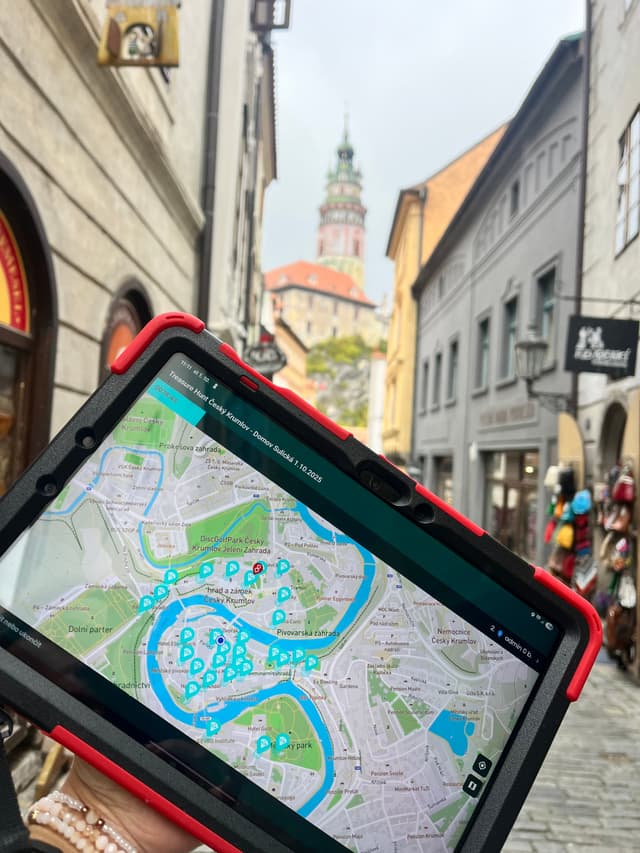
For those of us at TerraHunt, this trend resonates deeply. The same impulse that drives players to explore real-world locations and solve clues in a city-wide adventure is the impulse museums are now tapping into: the desire to be an active participant in discovery, not a passive spectator.
The Digital Divide Risk
But this technological revolution carries real risks. Research from Gensler notes that "museum leaders worry that over-emphasis on technology is displacing human interaction." There's also a growing concern that institutions without the resources to invest in expensive immersive installations could be left behind, creating a two-tier museum world: one where well-funded institutions dazzle visitors while smaller community museums struggle to keep up. The challenge is to harness technology in ways that enhance rather than replace the fundamentally human experience of encountering art and history.
Digital Engagement Soars: The Hybrid Museum Model
Museums are no longer defined solely by their physical spaces. Digital engagement is surging, particularly in Europe, as institutions adopt hybrid models that extend their reach far beyond their walls.
Read also: Innovative Team Building Treasure Hunts
Sweden offers a compelling case study. According to the Network of European Museum Organisations (NEMO), Swedish museums recorded 32.6 million website visits in 2025, a significant jump from 26 million in 2024. Visits to digital collections climbed to 15 million, up from 11 million the previous year. And perhaps most striking: views of museum-contributed material on Wikimedia platforms more than doubled to 376 million. All of this happened even as physical visits saw a slight 1.8% dip.
Gunnar Ardelius, Secretary General of the Swedish Museums Association, captured the significance of this shift: "It is clear that museums are not only physical places but also digital meeting places. Museums now reach millions of people, both in Sweden and internationally."
Finland tells a different but equally encouraging story. According to NEMO, museum attendance there has grown 55% over the last decade, with over 8.4 million visits recorded in 2024. Physical and digital growth aren't mutually exclusive: different countries and institutions are finding success through different models.
Returning What Was Taken: Repatriation Reshapes Museum Narratives
The movement to return looted and stolen artifacts to their countries of origin is picking up speed in 2026, and it's fundamentally reshaping how museums think about ownership, narrative authority, and cultural justice. Repatriation, the process of returning cultural objects to their communities of origin, is no longer a fringe demand. It's becoming mainstream practice with measurable impact.
Read also: Europe's Hidden Travel Gems
Ghana's Asante Kingdom: A Landmark Case
One of the most significant repatriation events of recent years took place in November 2025, when 130 gold and bronze artifacts were returned to Ghana's Manhyia Palace Museum from the United Kingdom and South Africa. This followed the return of 67 other artifacts to the same museum in 2024.
The impact has been tangible and dramatic. According to reporting on the repatriation movement, the Manhyia Palace Museum saw its visitor numbers nearly double to 87,000 in 2024, demonstrating that returned heritage can drive both cultural pride and economic activity. Ivor Agyeman-Duah, Associate Director of the Manhyia Palace Museum, emphasized the deep significance of these returns: "These objects are more than historical artefacts; they are spiritual symbols that connect us to our ancestors and reinforce the cultural identity of the Asante people."
Broader Momentum
The repatriation trend extends well beyond Ghana. In the United States, the Manhattan District Attorney's Office was particularly active in 2025, repatriating antiquities to numerous countries including Italy, Greece, Egypt, and Pakistan. This law enforcement-driven approach adds a new dimension to the movement, treating the possession of looted artifacts not merely as an ethical failing but as a legal matter.
The process isn't without complications, though. Proving provenance (the documented history of an object's ownership) remains a significant challenge. International law, diplomatic sensitivities, and debates over where and how objects should be cared for after their return all add layers of complexity. Despite these hurdles, the direction is clear: the era of unchallenged Western possession of the world's cultural heritage is drawing to a close.
Museums as Community Anchors: More Than Just Exhibits
Museums in 2026 are expanding their role far beyond the display of objects. Increasingly, they function as essential community infrastructure: providing education, workforce development, and social connection.
Even under severe financial pressure, U.S. museums are delivering crucial social services. According to the AAM's 2025 Annual Snapshot:
- 36% of U.S. museums offer direct educational support, including tutoring and after-school programs.
- 19% provide workforce development or job training programs.
Given the funding crisis described earlier, those figures are remarkable. They suggest that many museum leaders see community service not as an optional extra but as central to their institutional mission and perhaps to their survival, as demonstrating community value becomes essential for securing local support and alternative funding.
Slowly Diversifying Audiences
This community-focused approach appears to be slowly changing who walks through museum doors. According to the AAM's demographic data, frequent museum-goers in the U.S. remain predominantly white at 84% in 2025, but that figure has decreased from 92% in 2017, a meaningful shift over eight years.
Among all U.S. adults who visited a museum at least once in 2025, the data shows growing diversity across racial and ethnic groups:
- 42% of Asian/Asian American adults visited a museum
- 35% of Native American/Alaska Native adults visited a museum
- 33% of Hispanic/Latine adults visited a museum
- 27% of Black/African American adults visited a museum
Significant gaps remain. But these numbers suggest that outreach efforts and community programming are having a measurable effect on broadening museum audiences.
The Museum of the Future: Position Over Neutrality
The philosophical identity of the museum is shifting in 2026. The theme for International Museum Day 2026, as announced by the International Council of Museums (ICOM), is "Museums Uniting a Divided World," emphasizing the role of cultural institutions in fostering dialogue and inclusion across social and political divides.
This reflects a broader movement away from the idea of the museum as a neutral, authoritative voice. As an article in Whitewall on anticipated 2026 museum openings states: "The museum of the future is no longer defined by neutrality or monumentality alone. It is defined by position: political, cultural, and ethical."
New institutions opening in 2026 embody this philosophy. The Guggenheim Abu Dhabi and the Lucas Museum of Narrative Art, according to Whitewall, are explicitly designed to challenge traditional art-historical narratives and elevate underrepresented forms of creativity. These aren't simply new buildings; they're statements about what museums should stand for in a fractured world.
This shift toward explicit positioning carries its own risks, though. As museums take more visible ethical and political stances, they risk alienating donors, government funders, and segments of the public. In the U.S., federal actions reflecting anti-DEI (Diversity, Equity, and Inclusion) sentiment have been cited as a direct threat to museum funding and programming. The tension between serving as a community anchor for all and taking principled positions on contested issues is one of the defining challenges for museum leadership in 2026.
What This Means for Explorers
For anyone who loves discovery, whether that means hunting for hidden treasures across a city, decoding historical clues, or simply wandering into a gallery and being caught off guard by something beautiful, the transformation of museums matters. These institutions are becoming more interactive, more accessible, more honest about their histories, and more connected to the communities they serve.
The same spirit of exploration that drives a TerraHunt adventure (the thrill of uncovering something hidden, the satisfaction of solving a puzzle, the joy of seeing a familiar place through new eyes) is increasingly what museums are trying to cultivate. The velvet rope is coming down. The question is no longer whether museums will change, but how fast, and whether the resources will be there to support it.
In 2026, the museum is not just a building full of old things. It's a living, evolving platform for understanding the world, and that makes it one of the most exciting spaces for cultural exploration today.
Frequently Asked Questions
Why is returning looted artifacts to their countries of origin difficult?
Proving provenance, the documented history of an object's ownership, remains a significant challenge. International law, diplomatic sensitivities and debates over where and how objects should be cared for after their return all add complexity. Despite these hurdles, repatriation is becoming mainstream practice.
How are museums using VR and immersive technology?
Museums deploy immersive technologies such as VR as core tools for storytelling and accessibility, not as flashy add-ons. These tools allow people who cannot visit in person to experience collections remotely. Gamification turns visits into interactive challenges that reward exploration and curiosity.
What is a hybrid museum model and how does it work?
A hybrid museum extends its reach beyond its physical space through digital engagement. In Sweden, museums reach people through websites, digital collections and Wikimedia platforms, and the Swedish Museums Association says museums are not only physical places but also digital meeting places.
How do museums support their local communities?
Some U.S. museums offer direct educational support, including tutoring and after-school programs, and others provide workforce development or job training programs. Demonstrating community value also helps museums secure local support and alternative funding, so many leaders treat community service as central to their mission.
Which museums are designed to challenge traditional art-historical narratives?
The Guggenheim Abu Dhabi and the Lucas Museum of Narrative Art are explicitly designed to challenge traditional art-historical narratives and elevate underrepresented forms of creativity, according to Whitewall. They are statements about what museums should stand for in a fractured world.