
Seeing Vienna without spending a fortune
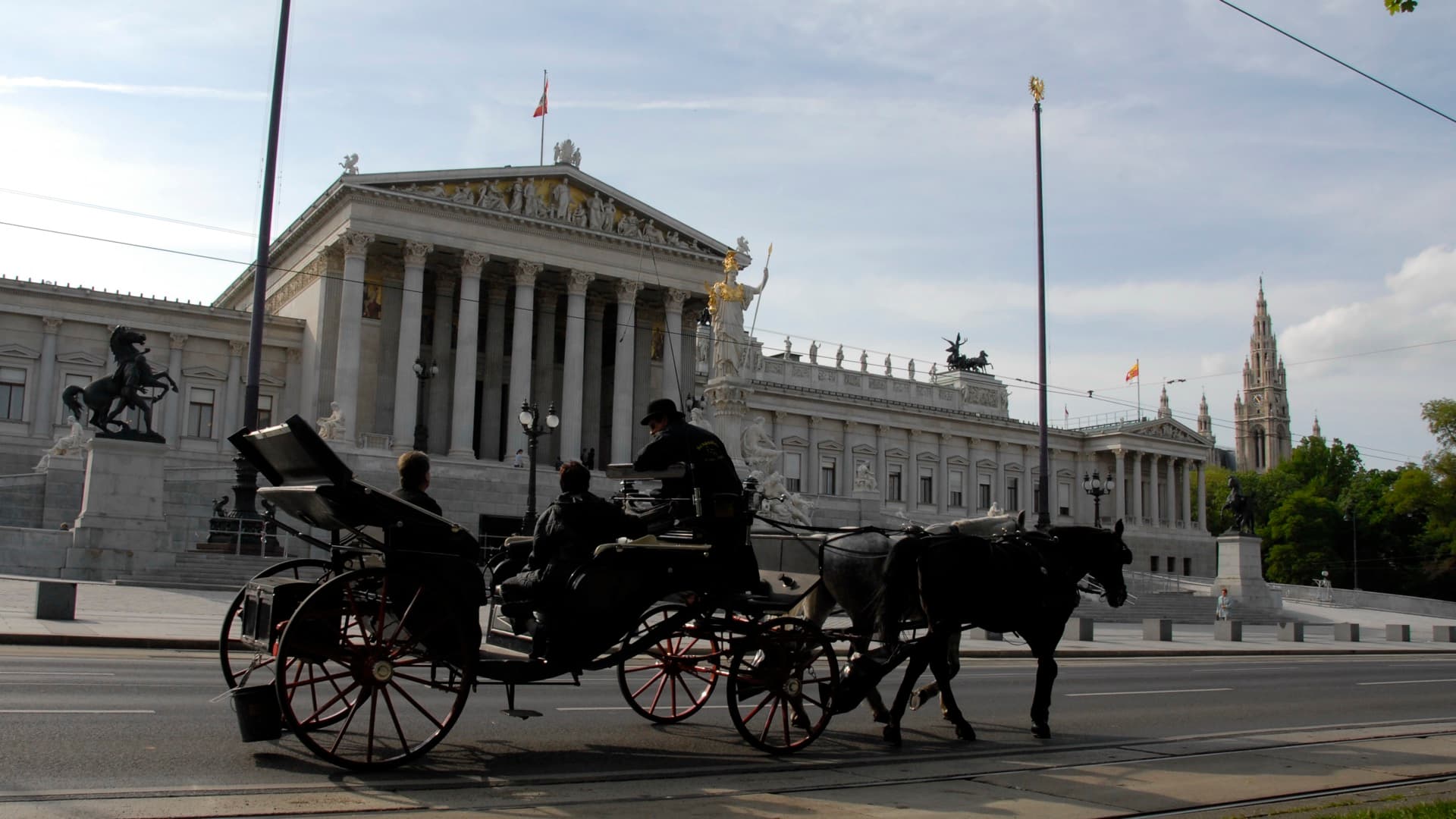
Vienna's grandest buildings charge nothing to look at. The State Opera, the Hofburg's parade square, the Parliament's columned front and the Rathaus's neo-Gothic spires all line the same curving boulevard, and you can walk past every one without opening your wallet. This guide to Vienna on a budget turns that into a two-day plan: a free walking tour and a stop-by-stop Ringstrasse route on Day 1, the Schonbrunn gardens on Day 2, plus a one-ticket rule for deciding which paid interior actually earns your money.
Where Does Vienna on a Budget Actually Start?
The travel blog On the Luce, in its guide to visiting Vienna on a budget, opens its list of things to do with three moves: take a walk around the Ringstrasse, join a free walking tour, and visit the Schonbrunn Palace gardens. That trio forms the backbone of this plan. None of them requires an entry ticket, and together they cover both the imperial center and the Habsburg summer palace on the city's western side.
Two practical basics come from the EU's official country profile for Austria: the currency is the euro and the official language is German. Travelers arriving from another eurozone country skip currency exchange entirely, which plugs one small, annoying leak in the budget.
Now the candid part. Free Vienna is mostly outdoor Vienna. The imperial apartments, the palace rooms at Schonbrunn and the big art museums all charge admission, and those prices change, so check each official site rather than trusting any blog figure. The strategy here isn't to skip every interior. It's to pick one, on purpose, and let the facades carry the rest of the trip.
Day 1 Morning: How Do Free Walking Tours Work in Vienna?
A free walking tour has no fixed ticket price. Guides work for tips collected at the end, so the honest way to budget is to set aside cash for a tip you consider fair rather than filing the tour under zero. On the Luce ranks joining one among its top budget moves, and the logic holds up: a guide decodes the old town's tangle of lanes in one go, which makes the rest of your self-guided wandering far easier to navigate.
To find one, search for free walking tours in Vienna and book a slot directly on the operator's own website; several companies run them, and schedules shift with the season. Meeting points generally sit inside the Innere Stadt, the old first district, around landmarks such as the State Opera, the Albertina or St. Stephen's Cathedral. Your booking confirmation gives the exact spot and start time, so screenshot it before you leave the hotel Wi-Fi.
Book the earliest morning departure available. The tour then wraps up around lunchtime, and you're a short walk from the Opera, which is exactly where the afternoon route begins. One more trick: ask your guide which single interior they'd pay for. That answer feeds straight into the one-ticket rule below.
Day 1 Afternoon: The Ringstrasse Route, Stop by Stop
The Ringstrasse is a broad boulevard curving around the old town, and walking the full loop burns energy on quieter stretches. The western arc packs the monumental buildings tightest, so that's the section to conquer. Start at the State Opera, keep the old town on your right, and head northwest. The route finishes at Schottentor, where the U2 line and several trams carry you back to your base.
Tired legs are part of the plan: trams run along much of the Ring, so doubling back to a favorite stop costs a transit ticket, not a taxi fare. Here's the order:
- Stop 1, State Opera: Circle the building once to take in its arcaded front and side facades. Karlsplatz station sits just south of it; remember that, because it's your Day 2 launch point.
- Stop 2, Burggarten and the Hofburg: Continue along the Ring and the Burggarten opens up on your right, with the Hofburg palace complex behind it. Walk through the Heldentor gate into Heldenplatz, the Hofburg's vast parade square. Crossing the square and courtyards costs nothing.
- Stop 3, Maria-Theresien-Platz: Directly across the Ring from the Heldentor, two near-identical museum palaces face each other, the Kunsthistorisches Museum and the Naturhistorisches Museum, with a monument to Empress Maria Theresa between them. Admire the domes from the square. If art is your one splurge, note it here.
- Stop 4, Volksgarten and Parliament: Head north. The Volksgarten and its rose beds sit on your right, and the Parliament's columned Greek-revival front rises on your left, its ramp and statues framing the building like a stage set.
- Stop 5, Rathaus and Burgtheater: Next comes the City Hall, a neo-Gothic cluster of spires behind a park on your left, facing the Burgtheater across the Ring on your right. The square in front of the Rathaus hosts seasonal events, so glance at what's on as you pass.
- Stop 6, University of Vienna and Schottentor: The university's main building lines the Ring just past the Rathaus. According to Wikipedia, the university was established on 12 March 1365 and counted 85,243 students in 2024/25, which explains the backpacks and cheap-lunch energy around here. Finish at Schottentor station.
Day 2: How Do You Get to Schonbrunn, and What's Free There?
From Karlsplatz, ride the U4 line toward Hutteldorf and get off at Schonbrunn station; the palace's main entrance is a short walk away. To start on the western side of the grounds near the zoo, stay on one more stop to Hietzing. The Wiener Linien journey planner shows live departures and ticket options. On the Luce also flags transport as a place to save, so compare the city's time-based passes against single tickets once you know how many rides your two days actually need.
On the Luce lists the palace gardens among its budget picks, and the main park is where your morning belongs. Walk out from the palace along the central axis, past the Neptune Fountain, then climb the hill to the Gloriette. From the top, the yellow palace spreads out below with the city skyline behind it, a view that costs only some breath. Gravel crunches underfoot, and the hedges are clipped so precisely they look like green walls.
Know the fine print. The palace interior is ticketed, and a few fenced garden sections, such as the maze and the Privy Garden, charge their own admission. Garden opening hours shift with the season, so check the Schonbrunn official site the night before rather than guessing at the gate.
Spend or Skip: Which Paid Ticket Earns Your Money?
Here's the rule: one paid interior per two-day trip. Pick it with a single question: would you regret flying home without seeing it? If the answer is yes, buy the ticket through the official site. If you're merely curious, the facade was enough.
Two candidates fit the route naturally. The Schonbrunn palace rooms slot into Day 2 because you're already standing at the gate. The Kunsthistorisches Museum slots into Day 1 because Stop 3 walks you right past its doors. Choosing one means the other stays an exterior photo, and that's fine.
Weather rule: rain decides the timing, never the budget. If Day 1 afternoon turns wet, swap the Ringstrasse walk for your paid interior and walk the Ring the next dry morning. If Day 2 dawns gray and wet, spend the morning inside the palace and hit the gardens once the gravel dries. Either way, you still buy only one ticket.
How Do You Eat Cheaply in Vienna?
Food is where a Vienna budget quietly leaks. European Commission reference budget research (the Austrian food basket for Vienna, priced in March 2015) set the monthly cost of a healthy diet for a single person at EUR 164, rising to EUR 210 once eating out and the social side of food are included. Those are resident figures from 2015, not traveler prices, but the gap tells the story: meals out push costs up fast.
Turn that into a plan. Buy lunch at a supermarket before the walking tour and eat on a bench in the Burggarten or Volksgarten on Day 1. For Day 2, pack snacks and water before you board the U4, and check the park rules on the Schonbrunn official site before spreading out a picnic. Save your eating-out money for one sit-down treat, like coffee and cake in a classic Viennese cafe, where the long, unhurried lingering is part of what you're paying for.
Where Does a GPS Treasure Hunt Fit a Tight Budget?
Free facades have one weakness with kids and teens: after the third palace, they blur together. A self-guided GPS treasure hunt fixes that by turning the same exteriors into puzzles and checkpoints, so the family navigates, decodes and races instead of trailing behind a parent with a map.
TerraHunt Play runs hunts in Vienna that you play on your own schedule, with no guide to book. It's a paid activity, so treat it like your one ticket and compare honestly: a palace interior gives you rooms and history, while a hunt gives you active outdoor play but won't get you inside any building. Check current pricing on the TerraHunt Play site before you decide.
Run it like this. Day 1: book the earliest free walking tour in the Innere Stadt, carry cash for the tip, then walk the Ring from the State Opera to Schottentor via Heldenplatz, Maria-Theresien-Platz, Parliament, the Rathaus and the university. Day 2: take the U4 from Karlsplatz to Schonbrunn, climb to the Gloriette, and check garden hours the night before. Buy exactly one paid ticket, chosen by the regret test, and let rain decide only when you use it. Groceries cover lunch; one cafe stop covers the splurge.
Keep exploring Vienna
If you want the city to talk back while you walk, the Vienna treasure hunts turn these same streets into a game. How it works, start times, and team sizes are on the how it works page.
Related reading: Vienna's snow globe was an accident, One day in Vienna without the rush.
Photo: Roland Weber via openverse, BY.
Explore the City Your Way
Book a self-guided GPS treasure hunt and discover hidden gems, landmarks, and local secrets with your team.
Related Articles
Budapest with kids beyond the baths
Budapest with kids beyond the baths: Margaret Island, a train run by children, and a two-day plan built on cheap trams and green space.
Two days in Krakow, planned for you
This Krakow 2 day itinerary plans it for you: Rynek Glowny, Wawel Hill, the Rynek Underground, and Kazimierz, plus what to book before you arrive.
One day in Vienna without the rush
A one day in Vienna itinerary you can actually walk: a first-district route, the one-palace rule, and where to eat without rushing your morning coffee.