City Guides
Buda or Pest for Your First Visit?
Listen to this article · 10 min
Budapest in One Day: Pest Sights, Then Szechenyi Baths
An AI summary of this article with two AI hosts. Facts checked against our sources.
Buda or Pest? One river splits the Hungarian capital into two towns that never quite agreed on which side wins. Buda climbs into wooded hills and guards the castle; Pest spreads flat across the east bank with the parliament, the grand boulevards, and most of the nightlife. For a first visit, that split isn't just scenery, it decides where you sleep, how far you walk, and how much of the city you actually see. Here's a straight decision rule, plus a route that crosses both in a single day.
Explore Our Adventures
 Medium
Budapest Grand Treasure Hunt
€29 per team
 Medium
Budapest Buda & Castle District Treasure Hunt
€24 per team
 Easy
EasyBudapest City Center Treasure Hunt
€19 per team
 Easy
EasyEssential Budapest Hunt
€8.90 per team
More Cities
Key Takeaways
- On a first visit to Budapest, stay in Pest and treat Buda as a half-day excursion.
- Budapest was formed in 1873 when the towns of Buda, Pest, and Obuda were unified.
- Most of Budapest's restaurants, bars, stores, museums, and attractions sit on the Pest side, according to Offbeat Budapest.
- Buda is the better base for a second Budapest trip or for travelers who want to hike and unwind rather than sprint between sights.
- The one-day Budapest loop runs from Castle Hill and Matthias Church over the Chain Bridge, past Parliament and St. Stephen's Basilica, to Heroes' Square.
Why is Budapest split into Buda and Pest?
The city you fly into is really three old towns stitched together. According to Wikipedia, Buda, Pest, and Obuda were unified in 1873 to form Budapest, and by then the capital had become co-capital of the Austro-Hungarian Empire. That imperial boom is why the place feels grander than a mid-sized country's capital should, an observation Rick Steves makes when he calls Budapest a cosmopolitan city of unexpected elegance.
Geography did the sorting. Offbeat Budapest notes that flat Pest offered room to sprawl, so it became the commercial center and the most populous part of the country long before unification. Buda stayed hilly, residential, and quieter. Culture Trip sums up the personalities travelers still feel today: Buda is the calmer, more relaxed side, while Pest carries the cafe scene and the nightlife.
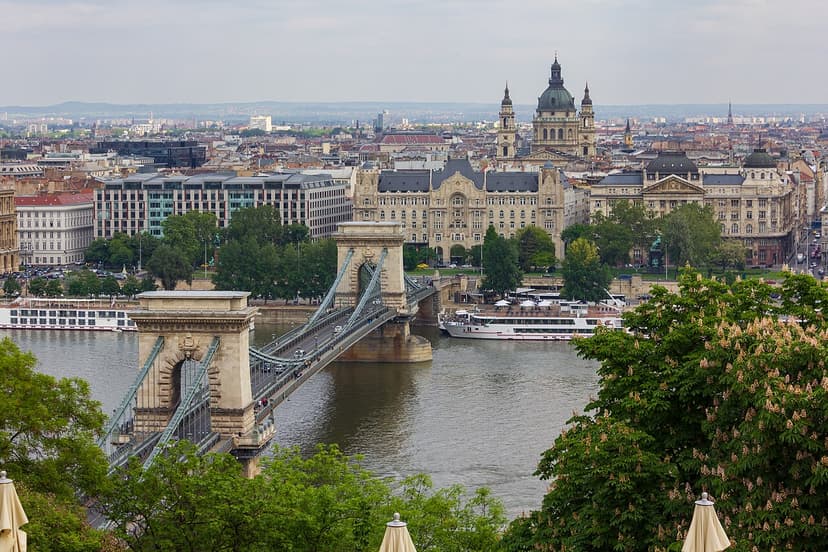
The Szechenyi Chain Bridge, opened in 1849 per Culture Trip, was the first permanent link between the two banks. Cross it once and the contrast is obvious underfoot: stone stairs and panoramas on the Buda side, wide flat avenues on the Pest side.
Buda or Pest for a first-timer: the quick decision rule
Short on time and deciding where to base yourself? The rule is simple: stay in Pest on a first visit, and treat Buda as a half-day excursion. Offbeat Budapest states it plainly, advising visitors to make Pest their home base and selectively venture out to parts of Buda such as Castle Hill and Bartok Bela Boulevard.
The reasoning is density. Offbeat Budapest reports that most of the city's restaurants, bars, stores, museums, and attractions sit on the Pest side, and that tourists cluster in central districts 1, 5, 6, 7, 8, 9, 11, and 13. Afar's own can't-miss walk (Chain Bridge, Parliament, St. Stephen's Basilica, Andrassy avenue, Heroes' Square) runs almost entirely through Pest.
Travelers on the Rick Steves forum reach the same verdict for short trips. One poster with two nights was told that for a first visit, staying on the Pest side makes more sense because most major attractions are there, with the Buda side saved for a return trip. Another swears by a spot near the Opera on Andrassy, calling it convenient to everything on the Pest side.
When Buda is the smarter base
Pest wins by default, not by law. Buda earns your bed in a few real cases, and Culture Trip lays them out. If you want quiet surroundings away from the crowds, a more local feel, and proximity to the Buda hills with their walking paths and parks, the calmer bank delivers. Families with kids and dogs, or anyone craving green space over ruin bars, will feel more at home there.
Access is not the trade-off you might fear. Culture Trip notes that public transport runs well into Buda, so you can live away from downtown and still reach the center in almost no time. One Rick Steves forum traveler stayed at a Buda hotel with a metro station a short walk away and reported being in Pest within a few minutes, watching the sunset over the Parliament from the room.
Buda also rewards a certain traveler: repeat visitors. The forum's recurring advice is to do Pest first, then come back and stay in Buda, which several posters say they greatly prefer for its calm. If this is your second trip, or you're here to hike and unwind rather than sprint between sights, flip the rule and sleep on the hill.
- Choose Buda if you want quiet, green space, and a residential feel over nightlife (Culture Trip).
- Choose Buda if transit access matters less than views; several districts still reach central Pest in minutes (Culture Trip, Rick Steves forum).
- Choose Buda on a repeat visit, when you already know the Pest highlights and want to slow down.
A one-day route that crosses both banks
You don't have to pick one side to see it. Here's a walkable loop, adapted from Afar's suggested itinerary, that starts in Buda's history and ends in Pest's grandeur, using the Chain Bridge as the hinge.
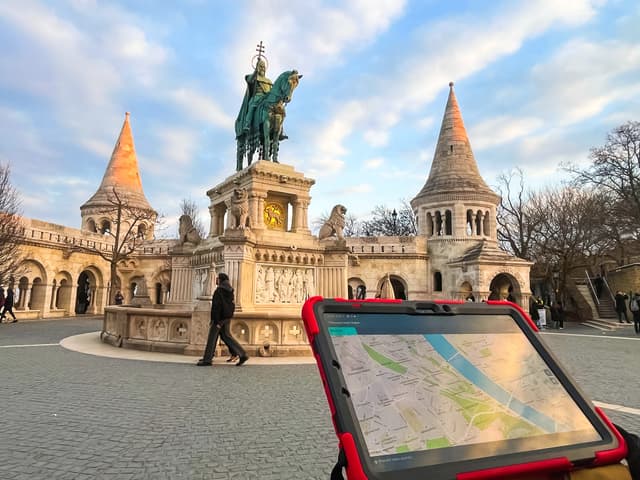
Begin high. Start on Castle Hill in Buda, where Buda Castle, first completed in 1265 according to Culture Trip, now houses the National Gallery and the Budapest History Museum. A short walk away sits Matthias Church, where Culture Trip notes Franz Joseph I was crowned in 1867, marking the start of the Austro-Hungarian Empire. Next door, Fisherman's Bastion opens a panorama over the Danube, Margaret Island, and Pest; Culture Trip mentions a fee for the upper terraces but says the free levels give views nearly as good.
Then descend and cross. Afar's walk takes you down a staircase toward the river and over the Szechenyi Chain Bridge into the heart of Pest. Walk north along the Danube to the Shoes on the Danube memorial and the neo-Gothic Parliament, Hungary's largest building. Loop back south through Szabadsag ter park to St. Stephen's Basilica, where Afar notes you can climb to the dome for the view.
Finish with the boulevards. Head up tree-lined Andrassy avenue past the State Opera House toward Heroes' Square and City Park, which Afar lists among the city's top sights. That's Buda's imperial memory and Pest's ceremonial spine in one continuous walk, and it's why basing in Pest but visiting Buda works so cleanly.
How to move between the sides
Budapest is built for feet. Afar calls it a manageable city for navigating on foot, and Offbeat Budapest points out that everything between the Danube and the Grand Boulevard (Nagykorut) is central and walkable. Lonely Planet's local writer offers the same one-word tip for travelers: walk, walk, walk, and get lost on purpose.
For longer hops, lean on transit. Wikipedia notes that Budapest opened the first underground line on the European continent in 1896, still running today as the M1, and that the metro and tram network carries 2.2 million people daily. Offbeat Budapest also flags the MOL Bubi bike-share system as an option for covering ground between neighborhoods.
A practical crossing trick comes from a Rick Steves forum traveler: take the tram along and across the river early in the day, ride the funicular up on the Buda side for the views and Matthias Church, then come back down. The same tram passes the Central Market Hall, which Afar calls a required stop for edible souvenirs, so you can fold lunch into the commute.
Turn the choice into a treasure hunt
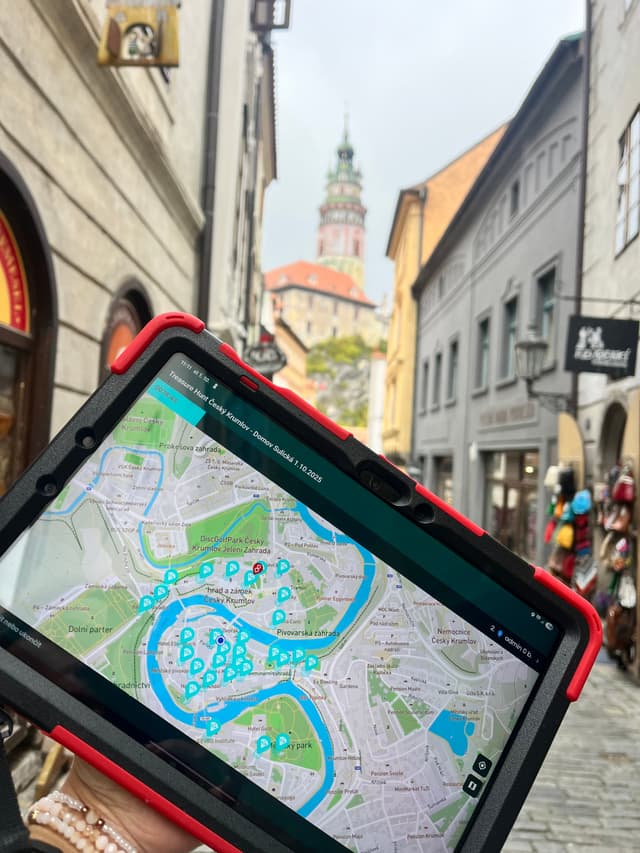
The best way to settle the Buda-versus-Pest debate is to let the city argue its own case while you play. Instead of trailing a guide, a self-guided GPS hunt sends your team across the checkpoints that matter, from Castle Hill's stone lookouts to Pest's grand squares, at whatever pace you set.
It suits the geography here. Because Pest is flat and central, you can string together basilica, boulevard, and river memorial on foot, then use one bridge crossing to unlock the Buda half of the map. Families get momentum instead of museum fatigue, and everyone ends the day having actually navigated the split that defines this city.
For a first visit with a base in Pest, a hunt is also a low-risk way to scout which side you'll want to sleep on next time, exactly the return-trip logic the Rick Steves forum keeps recommending.
Decision made simple: on a first visit, book your bed in central Pest (districts 5, 6, or 7, near Andrassy or the river, where forum regulars stay), and give Buda a single half-day. Walk the loop from Castle Hill and Matthias Church, cross the Chain Bridge, then follow the Danube past Parliament to St. Stephen's Basilica and up Andrassy to Heroes' Square. Save the Buda hills, the quiet residential streets, and a hotel with a Parliament view for your return trip. Two banks, one river, and now a clear order to see them in.
Frequently Asked Questions
Which Budapest districts are best for a hotel on a first visit?
For a first Budapest visit, book a bed in central Pest, in districts 5, 6, or 7, near Andrassy or the river, where forum regulars stay. Then give Buda a single half-day visit, starting from Castle Hill and Matthias Church.
Is it easy to get from Buda to Pest and back?
Yes, public transport runs well into Buda, so you can stay on that side and still reach the center in almost no time. One Rick Steves forum traveler who stayed at a Buda hotel with a metro station a short walk away reported being in Pest within a few minutes.
Is Budapest walkable, and what transport helps for longer hops?
Yes, Budapest is walkable: everything between the Danube and the Grand Boulevard (Nagykorut) is central and walkable. For longer hops, use the metro and tram network. The M1 line opened in 1896 as the first underground line on the European continent. The MOL Bubi bike-share system is another option.
What is there to see on Castle Hill in Buda?
Castle Hill holds Buda Castle, first completed in 1265, which now houses the National Gallery and the Budapest History Museum. Matthias Church, where Franz Joseph I was crowned in 1867, is a short walk away, and Fisherman's Bastion next door opens a panorama over the Danube, Margaret Island, and Pest.
Keep exploring Budapest
If you want the city to talk back while you walk, the Budapest treasure hunts turn these same streets into a game. How it works, start times, and team sizes are on the how it works page.
Related reading: Budapest Vienna Bratislava Family Trip, Budapest: Historic Beauty Meets GPS Treasure Hunts.