City Guides
Margaret Island, Budapest's car-free escape
Until 1901, nobody strolled onto Margaret Island. The Budapest Info website notes it was reachable only by ship or boat until a wing of Margaret Bridge finally reached it. Today the problem runs the other way: the hard part is getting a car onto it. That is the Margaret Island Budapest residents know, with runners on the track, picnic blankets on the lawns and medieval ruins under old trees. This guide covers how to get there without a car, which parts of its story are history and which are tradition, and a south to north walking route for your first visit.
Explore Our Adventures
 Medium
Budapest Grand Treasure Hunt
€29 per team
 Medium
Budapest Buda & Castle District Treasure Hunt
€24 per team
 Easy
Budapest City Center Treasure Hunt
€19 per team
 Easy
Essential Budapest Hunt
€8.90 per team
More Cities
Key Takeaways
- Margaret Island is Budapest's car-free escape, with car entry limited since the 1980s to a single bus line, taxis and service traffic.
- Walking from Margaret Bridge to Arpad Bridge covers the island south to north, so visitors finish at the Japanese Garden without doubling back.
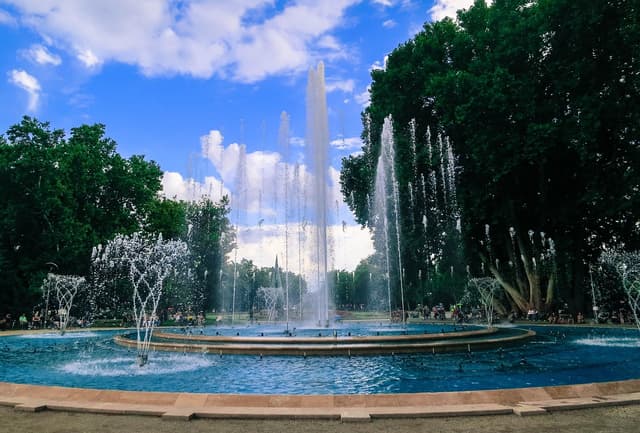
- The Musical Fountain near Margaret Bridge plays a musical program every hour, and its evening shows add a laser projection on the water curtain.
- Before the 14th century the island was called Insula leporum, the Island of Rabbits, and its small zoo still keeps rabbits, fowl and deer.
- The Japanese Garden on the northern end looks its best at the end of March, when the trees around its pond are blooming.
Why Is Margaret Island the Car-Free Answer in Budapest?
Since the 1980s, Wikipedia's entry on the island explains, entry by car has been limited. Only a single bus line and taxis get in, along with service traffic for the island's stores and restaurants. Hotel guests park in a lot at the northern end. Everyone else arrives on foot, by bike or by bus.
Rick Steves calls it Budapest's 'traffic-free urban playground' in his Budapest guide, listing spas, ruins, gardens, a game farm and fountains. Culture Trip describes running here as free from the noise and pollution of the city, with the Danube flowing quietly beside you. That's the trade you're making: you swap tram bells and engine noise for footsteps, bike wheels and water.
Two bridges anchor the island. Margaret Bridge sits at the south end and Arpad Bridge at the north. That geometry makes a one-way walk easy: enter at one bridge, leave at the other, and you've crossed the river without retracing a single step.
How Big Is the Island, Really?
The sources disagree on the measurements, so know that up front. Budapest Info gives a length of 2800 meters and an area of almost 100 hectares. Wikipedia lists the island at 2.5 km long and 500 m wide, and Lonely Planet converts that to 1.6 miles by 550 yards. Either way, it's long and slender, the kind of place you walk end to end rather than circle aimlessly.
The shape is partly engineered. Wikipedia records that today's island formed when three separate islands, the Festo (Painter), the Furdo (Bath) and the Nyulak (Rabbits), were joined at the end of the 19th century to control the flow of the Danube. The ground was raised, too, from 102.5 to 104.85 meters above sea level, to keep floods out.
Time Out Budapest frames it with a line locals will recognize: if Budapest had a living room, it would be Margaret Island. Their writer describes long spring and autumn walks between the two branches of the Danube. Water on both sides, the city held at arm's length. That's the escape.
From Island of Rabbits to Princess Margaret: Fact and Tradition
Before the 14th century, the island had a blunter name: Insula leporum, the Island of Rabbits. It later took the name of Saint Margaret (1242 to 1270), the daughter of King Bela IV of Hungary, who lived in the Dominican convent here.
Here fact and tradition part ways. Budapest Info says Margaret, 'with her life and miracles,' holds a special place in Hungarian history. Her life, her family and her convent are part of the historical record. The miracles belong to religious tradition and devotion, not to documented history. Walk the convent ruins with both stories in mind and the stones get more interesting, not less.
The timeline runs deeper than Margaret. Budapest Info reports that excavations turned up inscribed stones and coins from the 2nd century, evidence the Romans had already visited, and that the island first appears in a document dating from 1225. Wikipedia adds that the Knights of St. John settled here in the 12th century. The island still holds 13th-century ruins of a Franciscan church and of a Dominican church and convent, plus a 12th-century Premonstratensian church.
Nunneries, churches and cloisters dominated the island until the 16th century. During the Ottoman wars the monks and nuns fled and the buildings were destroyed. In the 18th century the island became a resort of the palatines, and in 1908 it was declared a public garden.
Save time for St Michael's Chapel. Culture Trip reports it contains the oldest bell in Hungary, cast in the 15th century. Nearby, busts of Hungarian poets, artists and writers line the Promenade of Artists (Muveszsetany).
What Happened Here in January 1945?
The calm is recent. During the siege of Budapest, the island saw fierce combat. Wikipedia describes Soviet troops failing to cross from the Pest riverside by boat in January 1945. On the night of January 19, the ice was thick enough for a few patrols to cross on foot and establish a bridgehead.
Several days of close-quarters fighting followed, much of it around the bath houses, where the opposing units spent days in each other's close vicinity. On January 28, the defenders slipped out under cover of darkness, by rowboat and across the still-standing western span of Margaret Bridge to Buda.
Knowing that changes how the lawns read. Older kids tend to remember the ice crossing long after they forget the fountain.
Where Did the Rabbits Go? The Small Zoo and the Japanese Garden
The Island of Rabbits still has rabbits. Culture Trip describes a small zoo that keeps animals typical of the medieval island: rabbits, yes, plus eccentric fowl and deer. Time Out calls it the Wildlife Park, and the Rick Steves listing calls it a game farm. It's no rival to the big zoo in City Park, and that's the point. Small kids get close encounters without a full day of walking.
The north end belongs to the gardens. Budapest Info describes a small wooden bridge leading to the Rock Garden and the Japanese Garden, with plant-lined paths running inland to a gently cascading waterfall. A 'Little Mermaid' statue rises from the center of the pond. Time Out points out the turtles in the fish pond, and Culture Trip singles out the lilies on the water.
Timing matters here. Culture Trip recommends the end of March, when the trees are blooming. Bring a quiet voice; this corner rewards slow feet.
A South to North Route Across Margaret Island Budapest
The official sources don't publish a walking time, so pace this to your group. Budapest Info says the island can be explored on foot, by bicycle or by bike carriage; for families with small kids, a bike carriage turns the full length into a ride instead of a march. The middle stops aren't in a fixed order, so weave between them on your way north.
- Start on Margaret Bridge. Culture Trip points to a viewing step at the bridge's midpoint, with the Parliament on one side and Buda Castle and Matthias Church on the other. Go after dark if you can, when the Parliament is lit up.
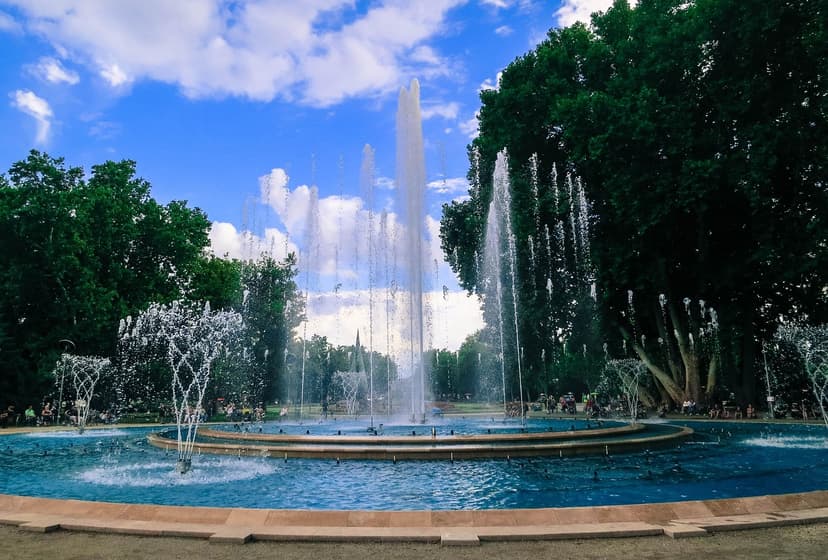
- Musical Fountain. It sits at the south, main entrance, and Budapest Info calls it Hungary's largest musical fountain: 36 meters in diameter, with a central jet shooting more than 25 meters high. A musical program plays every hour, and evenings add a laser projection on the water curtain, so arrive just before the top of the hour.
- The lawns and the Great Meadow. Lonely Planet notes the lawns near the fountain fill first and get less crowded the farther in you go. Time Out names the Nagyret (Great Meadow) as the spot where half the city sunbathes, plays badminton and eats langos.
- Water Tower. Built in 1911, it rises above the old trees and offers a 360-degree panorama of Budapest. Culture Trip adds that it still works as a water tower and that summer open-air concerts and shows, from orchestral music to ballet, take place beside it.
- Convent ruins and St Michael's Chapel. In the shade of 200-year-old trees, Budapest Info places the former home of Princess Margaret, the ruins of the Dominican convent and the chapel. Pair this stop with the Promenade of Artists and its busts.
- Small zoo. Check on the rabbits, fowl and deer. Kids who heard the Island of Rabbits story at the start get their payoff here.
- Japanese Garden, then out by Arpad Bridge. Cross the wooden bridge, find the waterfall, count the turtles, and exit at the north end without doubling back.
When to Go, and What's Free?
Summer is peak picnic season. Lonely Planet describes crowds arriving with blankets, cold bottles of wine and snacks, and Time Out adds open-air concerts. If crowds bother you, walk past the fountain lawns before you spread your blanket.
Autumn is Time Out's pick: their free-things guide calls the island at its most beautiful then and suggests catching the last Musical Fountain performance at 9pm, when projector screenings add color to the melodies. Culture Trip ties the fountain shows to the summer months, so the schedule varies by season; check it before you plan an evening around it.
Plenty costs nothing. Time Out's list of free experiences includes listening at the Musical Fountain, running laps of the padded track any time day or night, badminton and picnics on the grass, the Wildlife Park and the turtles in the fish pond.
Runners get their own loop. Time Out puts the running track at 5.3 kilometers and calls it one of the most popular training routes in the city. Culture Trip rounds it to 5 km and notes the island is the finish point of marathons and half marathons organized in Budapest.
Swimmers and soakers have options too, but they're separate venues with their own entry rules. Budapest Info says 70-degree spring water rising from the ground feeds the island's medicinal baths. Wikipedia describes the Palatinus water park as the largest open-air swimming complex in Budapest. Culture Trip points competitive swimmers to the Alfred Hajos Swimming Pool, the national pool, designed by and named after Hungary's first Olympic medalist. Check each venue's official site for current hours and tickets.
Which Version of the Island Fits Your Group?
Families with young kids: go for the fountain and the zoo, with a bike carriage in between. History fans: build the visit around the convent ruins, St Michael's Chapel and the 1945 story. Runners: do the loop early, then reward yourself on the Great Meadow.
Couples and photographers: start on the Margaret Bridge viewing step at dusk and end at the fountain's evening show. Garden lovers: aim for the end of March and give the Japanese Garden the time it deserves. Pick one anchor per group and let the rest of the island fill in around it.
The rule of thumb: enter at Margaret Bridge, leave by Arpad Bridge, and let the island unfold south to north. Reach the Musical Fountain just before the top of the hour, carry your picnic blanket past the first lawns, and save the Japanese Garden for last. For kids, the Island of Rabbits name sets up the zoo; for history fans, the convent ruins and the 1945 battle give the lawns a second layer. When you're ready for the city's streets again, pair the island day with a TerraHunt Play game in Budapest and turn the other side of the Danube into your team's playground.
Frequently Asked Questions
How do you get to Margaret Island in Budapest without a car?
Walk or cycle onto the island from Margaret Bridge at the south end or Arpad Bridge at the north end. Car entry has been limited since the 1980s, so only a single bus line, taxis and service traffic drive in. Budapest Info lists foot, bicycle and bike carriage as ways to explore.
Is Margaret Island in Budapest free to visit?
Most of the island's outdoor experiences cost nothing. Time Out lists the Musical Fountain, the running track, badminton and picnics on the grass, the Wildlife Park and the turtles in the fish pond. The baths and pools, such as Palatinus, are separate venues, so check their official sites for entry details.
How long is the running track around Margaret Island Budapest?
Time Out puts the running loop at 5.3 kilometers and calls it one of the most popular training routes in Budapest, while Culture Trip rounds it to 5 km. The padded track circles the island, runners use it any time day or night, and it costs nothing.
When is the best time to visit Margaret Island in Budapest?
Autumn is the top pick from Time Out, which calls the island at its most beautiful then and recommends the 9pm Musical Fountain performance with projector screenings. Go at the end of March for blooming trees in the Japanese Garden, and expect picnic crowds on the lawns in summer.
What historic sights can you see on Margaret Island Budapest?
The ruins of the Dominican convent where Princess Margaret lived are the main historic sight. St Michael's Chapel holds what Culture Trip calls the oldest bell in Hungary, and the Water Tower, built in 1911, offers a 360-degree panorama of the city from the top.
Keep exploring Budapest
If you want the city to talk back while you walk, the Budapest treasure hunts turn these same streets into a game. How it works, start times, and team sizes are on the how it works page.
Related reading: Witches, saints, and the hill above Budapest, Budapest with Kids Beyond the Baths.