Cultural Exploration
The Croissant Is Viennese, Not French
Listen to this article · 19 min
Vienna Myths Fact-Checked: Croissants to Snow Globes
An AI summary of this article with two AI hosts. Facts checked against our sources.
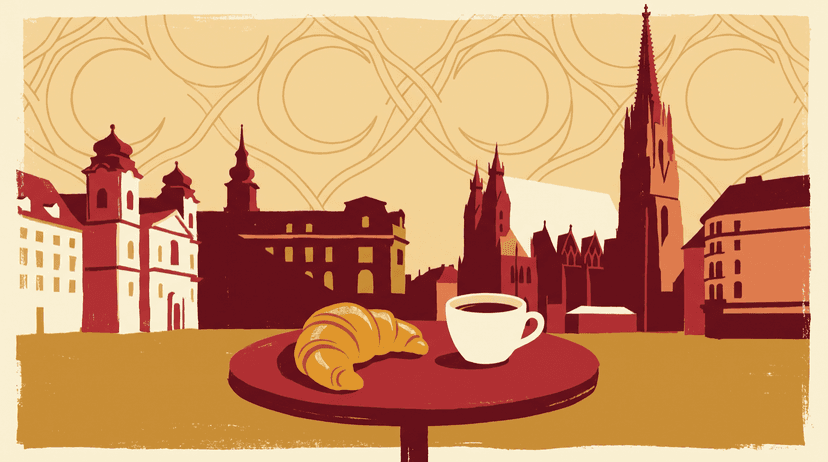
Legend has it that in 1683, while the Ottoman army besieged Vienna, a baker working through the night heard the enemy tunneling under the walls and raised the alarm. When the city held, so the story goes, Vienna's bakers shaped a pastry like the crescent moon on the Turkish banners, and the croissant was born. So, was the croissant invented in Vienna? It is a great story, and almost certainly not how the pastry came to be. Here is what the written record shows, plus a five-minute method to pressure-test any origin story before it lands on your menu or your marketing page.
Explore Our Adventures
 Medium
Vienna Grand Treasure Hunt
€29 per team
 Easy
EasyEssential Vienna Hunt
€8.90 per team
More Cities
Key Takeaways
- The croissant's origin is a split decision: the crescent-shaped kipferl is Viennese, but the laminated, butter-layered croissant is a French development of the early 1900s.
- The legend that Vienna's bakers shaped a crescent pastry after the 1683 siege has no recipe, bakery record, or period document behind it.
- The kipferl, a crescent-shaped Austrian pastry, dates to at least the 13th century, according to Wikipedia.
- To fact-check a food origin legend, split shape from recipe, find the first written date, measure the gap, and look for the hero in period sources.
- The legend that Marie Antoinette brought the croissant from Vienna in the 1770s is unlikely, since the pastry is not really mentioned in literature until the 1840s.
The Legend, as Vienna Tells It
Every version starts the same way. According to National Geographic, legend has it croissants date back to the siege of Vienna in 1683, when a local baker alerted Austrian forces to a surprise attack by the Turks. To commemorate the victory, so the story goes, the city's bakers made pastries in the shape of a crescent moon, the same crescent seen on the Ottoman banners. The word croissant is simply French for crescent.
The tale even has a sequel. National Geographic notes that Marie Antoinette, who came to France from Vienna in 1770, supposedly introduced the croissant to the French court, where the baker Louis Ernest Laduré later popularized it. Homesick princess brings her favorite pastry to Versailles: it is the kind of detail that makes a legend stick.
It is worth saying plainly what this is. Locals will tell you the siege story with total conviction, and it belongs in the same file as most food-origin myths: a memorable narrative bolted onto a real event long after the fact. The battle happened. The pastry connection is lore.
What the Written Record Actually Shows
Start with the shape, because that part has real Austrian roots. Wikipedia dates the kipferl, a crescent-shaped Austrian pastry, to at least the 13th century in Austria, made plain or with nuts and other fillings. So Vienna owns the crescent. What it does not own is the croissant as you eat it today.
The modern croissant is defined by its dough. Wikipedia describes it as a laminated yeast dough that sits between a bread and a puff pastry, folded and rolled repeatedly so butter forms thin layers. That technique and that pastry show up much later than 1683. Wikipedia places the earliest known recipe for the present-day croissant at 1905, with the name croissant appearing among the 'fantasy or luxury breads' as early as 1853, and states the modern croissant was developed in the early 20th century, when French bakers replaced the brioche dough of the kipferl with a yeast-leavened laminated dough.
The Paris link is documented, and it is Austrian in a roundabout way. Wikipedia records that an Austrian artillery officer, August Zang, founded a Viennese bakery, the Boulangerie Viennoise, at 92 rue de Richelieu in Paris in 1838 or 1839, serving kipferl and Vienna loaves that inspired French imitators. Atlas Obscura tells the same story, noting laminated dough took Paris by storm in 1839 when Zang set up shop. By 1872, Wikipedia notes, Charles Dickens was writing of 'the dainty croissant on the boudoir table' in his periodical All the Year Round. In its infobox, Wikipedia lists the place of origin as France.
So, Was the Croissant Invented in Vienna?
The honest answer is a split decision, and it is more interesting than a flat yes or no. The crescent silhouette is Viennese: the kipferl came first, by several centuries, per Wikipedia. The laminated, butter-layered croissant that people line up for is a French development of the early 1900s, again per Wikipedia. National Geographic's Vienna guide threads the needle neatly: it was a Viennese who invented the croissant in a bakery in Paris, derived from the crescent-shaped Austrian biscuit, the kipferl.
Read that carefully. Austrian person, Austrian ancestor pastry, French city, French technique, French recipe on paper. The croissant is the child of a Viennese shape and a Parisian kitchen. Anyone who tells you it is purely Viennese, or purely French, is trimming the story to fit their flag.
And the 1683 siege? There is no recipe, no bakery record, no period document tying a crescent pastry to that battle. It surfaces as lore in later tellings, the way the trumpeter and other siege legends tend to. Treat it as a good yarn, not a citation.
How to Fact-Check a Food Legend in Five Minutes
Here is the part you can actually use this week. If you run a cafe, a food tour, a bakery, or you write travel content, an origin story that collapses under a quick check is a liability the moment a customer Googles it. Before a claim goes on a menu card, a tour script, or a marketing page, run it through four steps. The croissant is the worked example, but the method travels to any dish.
Do this the next time a supplier, a guidebook, or your own copy makes a heritage claim. It takes minutes and it protects the one thing a food business sells alongside the food: a story people trust.
- Separate the shape from the recipe. A crescent outline is not a croissant; the laminated, butter-layered dough is. Wikipedia dates the kipferl shape to at least the 13th century, but 'ancient shape' and 'invented the pastry' are two different claims.
- Find the earliest written recipe or reference and note the date. For the croissant, Wikipedia puts the first known recipe at 1905 and the name in print by 1853. If nobody wrote it down near the legendary date, be suspicious.
- Measure the gap between the legend and the first record. The siege story is set in 1683; the first croissant recipe lands more than two centuries later. A gap that wide is the classic tell of a legend attached after the fact.
- Check whether the hero appears in period sources. Culture Trip reports the Marie Antoinette story is unlikely, because the pastry is not really mentioned in literature until the 1840s. No contemporary paper trail, no confirmed hero.
The Marie Antoinette Problem
The homesick-princess subplot is the most quotable part of the legend and the easiest to knock down. National Geographic reports the belief that Marie Antoinette introduced the croissant to France after arriving from Vienna in 1770. Culture Trip runs the same claim through step four above and finds it wanting: she is reputed to have brought it over in the 1770s, but that is apparently unlikely, since the pastry is not really mentioned in literature until the 1840s.
The dates simply do not line up. Culture Trip notes Charles Dickens loved the pastry on a visit to Paris in 1846, which fits the 1840s emergence, not the 1770s. When a legend's timeline and the written record disagree by roughly seventy years, the legend is decoration, not evidence.
A Crescent-Spotting Checklist for a Vienna Cafe
Turn the history into a small mission on your next trip. National Geographic notes you will find these pastries in all of Vienna's traditional cafes and bakeries, so ordering the ancestor and the descendant side by side is easy and cheap. Use this quick decision rule at the counter to taste the difference the record describes.
- Order a kipferl and a croissant together. Wikipedia describes the kipferl as a crescent Austrian pastry, plain or filled with nuts, denser than the laminated croissant. One is the 13th-century shape, the other the 20th-century technique.
- Look for layers. Tear the croissant open. Wikipedia describes a dough folded and rolled repeatedly for a flaky, puff-pastry-like texture, so a real one shows honeycomb layers, not a uniform crumb.
- Taste for butter. Culture Trip reports butter makes up about a quarter of a croissant's ingredients, so a proper one tastes rich, not dry. Prices and menus change, so check the cafe's board on the day.
Verdict on the myth: the crescent shape is Viennese, rooted in the kipferl that Wikipedia dates to at least the 13th century, but the laminated, butter-heavy croissant is a French creation of the early 1900s, and Wikipedia lists France as its place of origin. The 1683 siege tale is lore, not documentation. Keep the five-minute check for the next origin story you hear: split shape from recipe, find the first written date, measure the gap, and look for the hero in period sources. Then go order a kipferl and a croissant together and taste four centuries of pastry history in one sitting.
Frequently Asked Questions
What is the legend linking the croissant to the siege of Vienna?
According to National Geographic, legend has it that croissants date back to the siege of Vienna in 1683, when a local baker alerted Austrian forces to a surprise attack by the Turks. To commemorate the victory, the city's bakers supposedly made pastries in the shape of the crescent on the Ottoman banners.
What is the difference between a kipferl and a croissant?
A kipferl is a crescent Austrian pastry, plain or filled with nuts, and denser than a croissant, which is a laminated yeast dough folded and rolled repeatedly so butter forms thin layers. One is the 13th-century shape, the other the 20th-century technique.
How did the Viennese kipferl reach Paris?
An Austrian artillery officer, August Zang, founded the Boulangerie Viennoise at 92 rue de Richelieu in Paris in 1838 or 1839. The bakery served kipferl and Vienna loaves that inspired French imitators, according to Wikipedia.
When was the first croissant recipe written down?
The earliest known recipe for the present-day croissant dates to 1905, according to Wikipedia. The name croissant was in print by 1853. That recipe lands more than two centuries after the 1683 siege that legend ties to the pastry.
Where can I taste a kipferl and a croissant in Vienna?
You'll find kipferl and croissants in all of Vienna's traditional cafes and bakeries, according to National Geographic. Order one of each side by side, then tear the croissant open: a real one shows honeycomb layers, not a uniform crumb.
Keep exploring Vienna
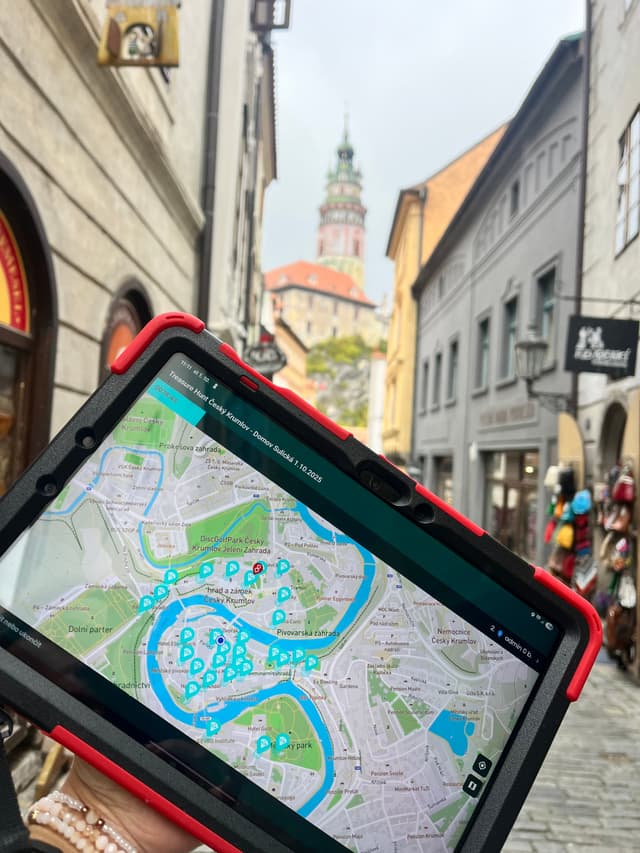
If you want the city to talk back while you walk, the Vienna treasure hunts turn these same streets into a game. How it works, start times, and team sizes are on the how it works page.
Related reading: What to do in Vienna when it rains, Is Vienna worth it with young kids?.