Cultural Exploration
Meet the Dragon That Guards Krakow

Listen to this article · 11 min
Two Days in Krakow: Old Town, Wawel, and What to Book
An AI summary of this article with two AI hosts. Facts checked against our sources.
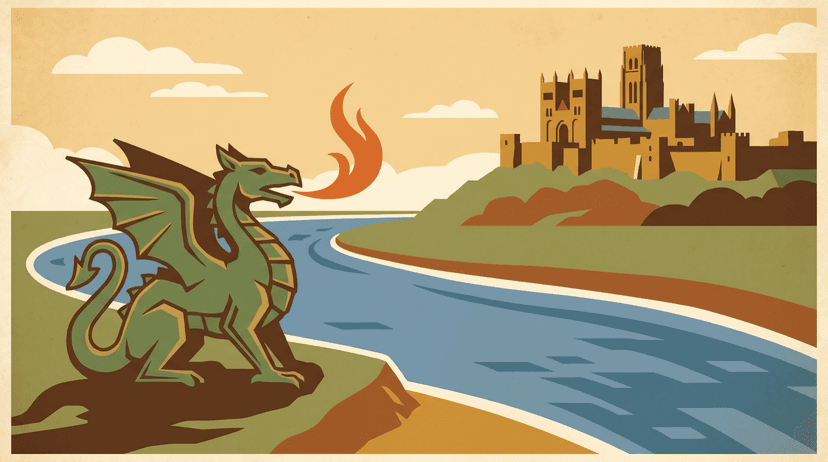
Down at the foot of Wawel Hill, a bronze dragon crouches on the riverbank and, every so often, belches a real gout of fire over the Vistula. Kids shriek. Cameras come out. This is Krakow's unofficial mascot, and the wawel dragon legend behind it reaches all the way back to the city's founding king. This guide untangles who really slew the beast (the story got rewritten at least three times), separates the myth from a genuine prehistoric predator, and hands you a step-by-step walk that ends at the dragon's feet.
Explore Our Adventures
 Medium
Krakow Grand Treasure Hunt
€29 per team
 Easy
EasyKrakow Old Town Treasure Hunt
€24 per team
 Easy
EasyEssential Krakow Treasure Hunt
€8.90 per team
More Cities
Key Takeaways
- In the Wawel dragon legend, a beast lives in a den under Wawel Hill and terrorizes King Krak's townsfolk, who keep it fed with offerings of cattle.
- The oldest surviving telling of the Wawel dragon legend comes from a 13th-century chronicle attributed to Wincenty Kadlubek, bishop of Krakow.
- The bronze dragon statue in Krakow stands by the river at the foot of Wawel, beside the Dragon's Den, and was designed to commemorate the vanquishing of the beast.
- Walking the Dragon's Den in Krakow means descending 130 steps into the cave and picking your way roughly 70 meters through its damp interior.
- The prehistoric Wawel Dragon was a genuine predator that roamed what is now southern Poland more than 210 million years ago, at the end of the Triassic period.
Why is a dragon the symbol of Krakow?
Krakow's dragon is not decoration bolted on for tourists. It is braided into the city's own origin story. According to Wikipedia's survey of the sources, the oldest surviving telling comes from a 13th-century chronicle attributed to Wincenty Kadlubek, bishop of Krakow. In it, a dragon appears during the reign of King Krak, the legendary founder whose name the city still carries. Tie the monster to the founder, and the beast becomes part of the city's DNA.
The krakow.travel legend page sets the scene plainly: the beast lived in a den under Wawel Hill and terrorized King Krak's townsfolk, who kept it fed with offerings of cattle. Other tellings, it adds, have the monster devouring only virgins. Either way the stakes are the same. A young capital, a hungry thing living underfoot, and a ruler who has to solve the problem or watch his people scatter.
How the wawel dragon legend actually goes (and why it keeps changing)
Here is the fun part for a legend hunter: nobody can agree on the hero. The tale was rewritten across the centuries, and each rewrite crowns a different savior. Read them side by side and you can watch a national folk story evolve in real time.
- The 13th-century version (Kadlubek): Wikipedia reports that King Krak calls on his two sons. They cannot beat the dragon by hand, so they feed it a cattle skin stuffed with smoldering sulfur, and the beast dies in flames. Then the younger prince murders his brother to take sole credit, gets found out, and is banished, which is how Princess Wanda ends up on the throne.
- The 15th-century version (Jan Dlugosz): Wikipedia notes that Dlugosz swapped the brothers' roles and handed the clever scheme to King Krak himself, who feared a mass exodus from the city and ordered the carcass packed with sulfur, tinder, wax, pitch, and tar.
- The 1597 version (Marcin Bielski): this is where the beloved underdog arrives. Wikipedia records that Bielski credited the trick to a cobbler named Skub, or Skuba, the humble shoemaker most Poles picture today.
The shoemaker's trick
The krakow.travel telling gives Skuba the full spotlight. No knight could vanquish the monster, the page says, until the young shoemaker outsmarted it. He stuffed a ram's hide with sulfur and pitch and left the doctored ram in front of the Dragon's Den. The beast swallowed the bait whole.
Then came the burning. According to krakow.travel, the sulfur set the dragon's throat on fire, so it lunged for the Vistula and drank and drank. Water cannot put out burning sulfur, and the gases building inside made the monster explode. The townsfolk celebrated, and the shoemaker was rewarded. It is a legend, not a chronicle of documented events, but it is the version that made the dragon a folk hero rather than a footnote.
The fire-breathing statue on the riverbank
The modern dragon most visitors photograph is a bronze by the contemporary sculptor Bronislaw Chromy. As krakow.travel explains, it was designed to commemorate the vanquishing of the beast and now stands by the river at the foot of Wawel, right beside the Dragon's Den. Lonely Planet describes it as a distinctive fire-spitting bronze dragon planted on the bank of the Vistula.
And yes, the fire is real. National Geographic notes that the sculpture periodically belches actual flame, which is why you will often see a small crowd of children waiting patiently for the next burst. It is the single best payoff of the whole walk, and it costs nothing to watch.
Where the legend meets real science
Krakow has a second dragon, and this one left bones. The official Wawel Royal Castle website tells the story of a genuine predator that roamed what is now southern Poland more than 210 million years ago, at the end of the Triassic period. At a brickworks near the village of Lisowice in Silesia, paleontologists Prof. Tomasz Sulej and Dr Grzegorz Niedzwiedzki uncovered fossils of a reptile they nicknamed the Wawel Dragon, a roughly 6-meter, bipedal animal that the site calls a distant cousin of crocodiles and birds.
The castle deliberately built a bridge between the myth and the fossil. Per the Wawel website, a reconstructed skeleton and a genuine tooth of this prehistoric predator go on display as part of the 'In Search of the Dragon' trail, loaned from the Museum of Evolution at the Institute of Palaeobiology of the Polish Academy of Sciences, showing from 15 April to 15 September 2026. If you want the legend and the science in one visit, that is the window to aim for. Check the official Wawel site for current opening details before you go.
Walk the dragon's trail: a step-by-step route
Here is the one thing to actually do on the ground. This short route strings the dragon story together in the order that makes sense, top of the hill down to the fire-breathing payoff, and it doubles as an easy way off Wawel Hill. Lonely Planet flags the Dragon's Den itself as exactly that: a shortcut down to river level rather than a backtrack up the slope.
Decision rule: save the Den for last. Because you exit at the bottom by the river, doing it first would force you to climb back up. End on it instead and you finish at the statue with the Vistula in front of you and no return climb.
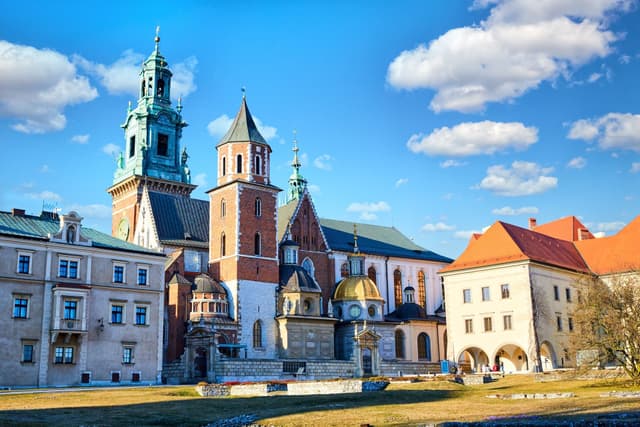
- Start on Wawel Hill at the cathedral. Before you head down, look for the massive iron door where, as the story goes, old bones said to be the dragon's hang on a chain (Lonely Planet). Treat this as lore, not proof; the real dragon's remains sit in the science exhibition, not here.
- Walk to the southwestern end of the complex, to the Thieves' Tower (Baszta Zlodziejska). Lonely Planet places the Dragon's Den entrance right next to it, with a good panorama over the Vistula.
- Buy your ticket from the coin-operated machine at the cave entrance (Lonely Planet), so carry a few coins rather than only cards.
- Descend 130 steps into the cave and pick your way roughly 70 meters through its damp interior, as Lonely Planet details. It is cool and dim, so a light jacket helps.
- Emerge on the bank of the Vistula directly beside the Chromy bronze. Wait for a fire blast (National Geographic), then walk the riverside path with the castle above you.
Turn the trail into a hunt
The dragon route rewards curiosity, which makes it a natural fit for a self-guided TerraHunt Play hunt through Krakow. Instead of reading plaques, your team decodes GPS clues between the cathedral, the Thieves' Tower, and the riverbank, racing to the statue at your own pace. The three competing versions of who killed the dragon make a great debate to settle while you walk: Kadlubek's princes, Dlugosz's king, or Bielski's shoemaker.
Do this: start at Wawel Cathedral, cross to the Thieves' Tower, then take the Dragon's Den last so you drop down 130 steps and about 70 meters of cave straight to the fire-breathing bronze by the Vistula (Lonely Planet). Bring coins for the ticket machine and a light layer for the cave. If your dates fall between 15 April and 15 September 2026, add the 'In Search of the Dragon' skeleton at the castle so you leave with both the myth and the fossil that inspired its name (Wawel Royal Castle). Watch for a flame burst before you go.
Frequently Asked Questions
Who killed the Wawel dragon in the Krakow legend?
It depends on the version. In the 13th-century Kadlubek telling, King Krak's sons kill it with a sulfur-stuffed cattle skin. Dlugosz in the 15th century gives the scheme to King Krak himself. Marcin Bielski's 1597 version credits a cobbler named Skub, or Skuba, the humble shoemaker most Poles picture today.
How did the shoemaker Skuba kill the Wawel dragon?
In the shoemaker version, Skuba stuffed a ram's hide with sulfur and pitch and left the doctored ram in front of the Dragon's Den. The dragon swallowed the bait, the sulfur set its throat on fire, and it drank from the Vistula until the gases building inside made it explode.
Does the Wawel dragon statue in Krakow really breathe fire?
Yes, the bronze dragon statue periodically belches real flame, according to National Geographic. It stands by the Vistula at the foot of Wawel, right beside the Dragon's Den, and you will often see a small crowd of children waiting for the next burst.
Should I visit the Dragon's Den first or last in Krakow?
Visit the Dragon's Den last. You exit at the bottom by the river, so doing it first would force you to climb back up. End on it instead and you finish at the statue with the Vistula in front of you and no return climb.
Where is the entrance to the Dragon's Den in Krakow?
The Dragon's Den entrance is at the southwestern end of the Wawel complex, right next to the Thieves' Tower (Baszta Zlodziejska), with a good panorama over the Vistula. From there, 130 steps lead down into the cave, and you exit at the bottom by the river.
Keep exploring
TerraHunt turns city walks into self-guided treasure hunts. See how it works or browse more guides on the blog.
Related reading: Krakow joins the TerraHunt map.