
The tiny statues hiding all over Budapest
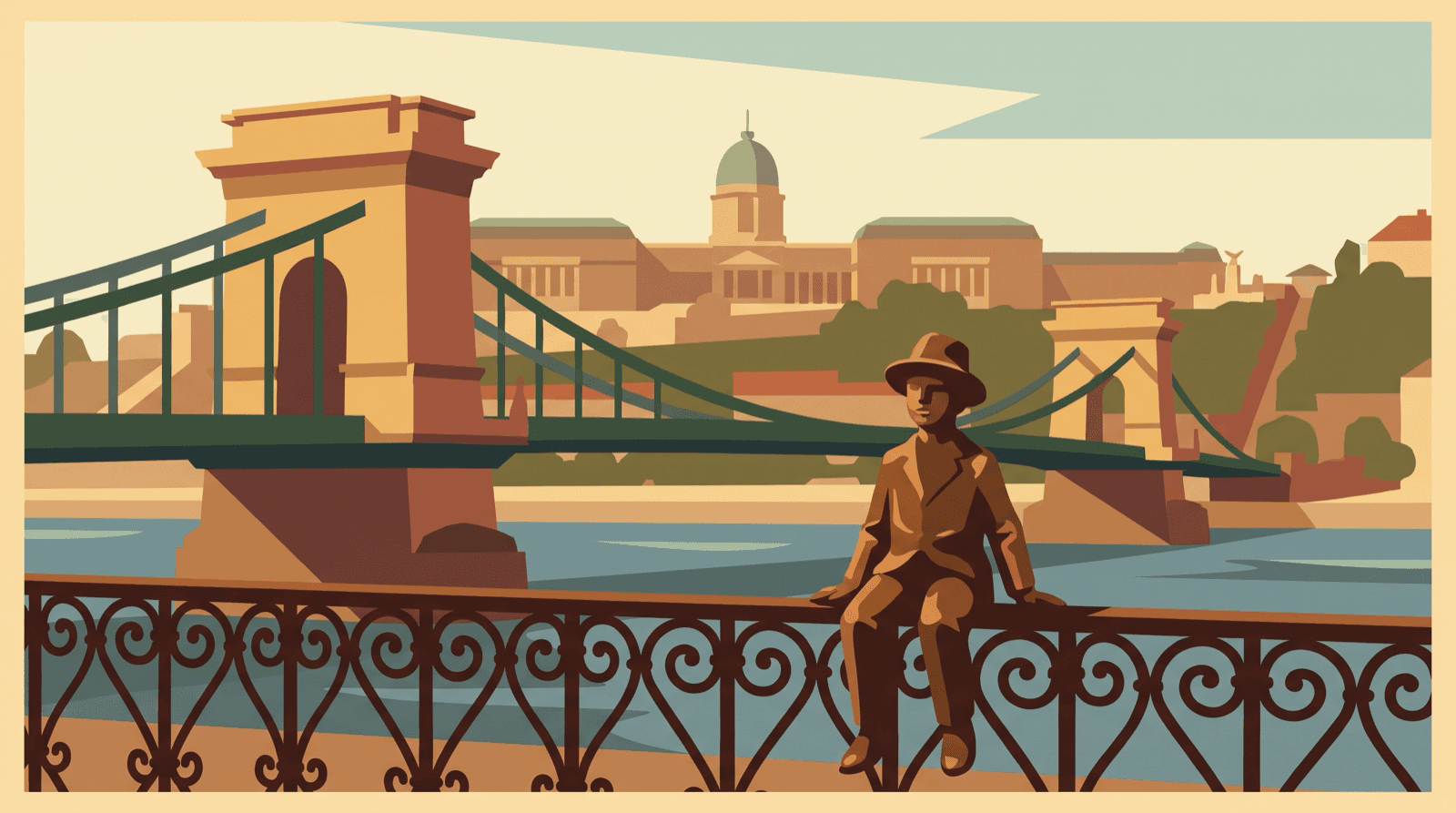
They are barely 15 centimeters tall, they hide on railings and stone ledges, and once you spot one, you start seeing them everywhere. The Kolodko statues Budapest keeps talking about are tiny bronze figures scattered across the city by a single guerilla sculptor. Some are cartoon characters, some are historical jokes, and some vanish overnight when a collector gets greedy. This guide hands you a walkable five-stop route through the center, the stories behind the figures, and a simple rule of thumb for finding them on your own.
Who is Mihaly Kolodko, and why are there tiny statues everywhere?
The man behind the miniatures is Mihaly Kolodko (also written Mykhailo Kolodko), a Ukrainian-Hungarian sculptor born in Uzhhorod in 1978, according to Wikipedia's entry on him. He trained as a monumental sculptor and graduated from the National Academy of Arts in Lviv in 2002, but demand for grand public statues dried up after the Soviet collapse. His first small-scale piece, a figure of Uncle Kolya the Lamplighter, went up in his home city of Uzhhorod in 2010. He moved to Hungary in 2017, and Budapest slowly turned into his open-air gallery.
Wikipedia records that his first Budapest mini-statue was a cartoon earthworm from a Hungarian children's television series, a 15-centimeter bronze that sits on the Danube embankment on the Buda side near Bem rakpart 15. A tank with a drooping barrel, a Trabant, King Francis Joseph I lounging in a hammock, and a scatter of bronze puppies followed. Kolodko installs most of these guerilla-style, without permits or ceremony, so the figures appear quietly and word spreads afterward.
What exactly are you looking for?
Bronze, small, and usually unsigned. Wikipedia notes that most of Kolodko's Budapest statues carry no signature, with two exceptions: a copy of the painter Ignac Roskovics, signed 'Kolodko' on the pencil, and a Roman legionary at the Aquincum amphitheater, signed on the helmet plume. So do not wait for a plaque or a name. Expect a small figure perched where you would not normally point your eyes: a handrail, the top of a stone block, a wall ledge just above the sidewalk.
They are also small enough to pocket, and some have been. The Mekk Elek statue, a tiny anthropomorphic goat on Szell Kalman ter, first appeared in early June 2018 and was stolen about a month later, according to Spotted by Locals; an identical replacement went up within weeks. That churn is part of the hunt. A figure that was here last year may be missing, or new since your friend's visit.
A 5-stop Kolodko statues Budapest hunt through the center
Here is the usable route. Start in the Jewish Quarter and work west toward the river, then cross to Buda for the finish. Budapest Info's roundup of Kolodko works supplies most of these addresses, and the two newer figures come from recent Time Out reports. Run them in this order and the walk flows in one direction with a coffee stop built into the first stop.
The whole thing doubles as a walking tour of District VII, Szabadsag ter, and the riverfront. The Rick Steves travel forum makes a good point about why that works: most Kolodko figures sit near top sights, but not at the exact spot the guidebooks send you, so hunting them nudges you a block or two off the standard path.
- Stop 1, the diver at New York Cafe (Dohany utca 53). A bronze diver clutching a key hangs near what Budapest Info calls the World's Most Beautiful Cafe. Grab a coffee here before you walk.
- Stop 2, Tivadar Herzl at the Dohany Street Synagogue (Dohany utca 1). Budapest Info notes Herzl, the writer often called the dreamer of the Jewish State, was born on this street in 1860. Walk down Dohany utca from the cafe to reach him.
- Stop 3, the pengo-blower at Szabadsag ter, near the corner of the Hungarian National Bank and Hold utca. Head west into District V from the synagogue.
- Stop 4, Piszkos Fred at Szechenyi Istvan ter, beside the Hungarian Academy of Sciences. Continue toward the river and the Chain Bridge.
- Stop 5, the bronze earthworm at Bem rakpart 15 on the Buda side. Cross the Chain Bridge from Szechenyi Istvan ter and walk north along the embankment to finish where Kolodko's Budapest story began.
The stories the statues are telling
Kolodko rarely places a figure at random. The diver at stop one is a punchline to an old piece of cafe lore. Legend has it that the writer Ferenc Molnar threw the keys of the New York Cafe into the Danube on its opening night in 1894, so the doors could never close, as Budapest Info recounts. The diver, key in hand, is the joke made solid: someone still has to fetch them back. Treat it as the kind of story locals tell, not a documented event.
The Szabadsag ter figure works the same way. Time Out reports it is a workman in ear protectors using a leaf blower to push around old pengo notes, and that the piece marks the forint's 80th birthday. The forint was introduced in 1946 to replace the pengo, which hyperinflation had rendered nearly worthless, and August 1, 2026 is the 80-year mark. As the story goes, people once swept worthless banknotes off the streets with brooms; Kolodko simply swapped the broom for a modern leaf blower.
The newest arrivals to hunt in 2026
Kolodko keeps expanding the collection, often around the holidays, so a current-year figure is usually the hardest to tick off. Time Out reported that two new pieces arrived in early 2026: Piszkos Fred the captain, a beloved antihero from Jeno Rejto's novels, set near the Hungarian Academy of Sciences on Szechenyi Istvan ter, and a Khanty hunter carrying a deer on his shoulders, placed near Kopaszi-gat at the Buda bridgehead of Rakoczi Bridge.
The pengo-blower joined the map more recently. Time Out noted in July 2026 that the figure had already been added to the Kolodko hunters' map, timed to the forint anniversary. If you want bragging rights, the freshest statue is the one worth chasing, because fewer visitors have found it yet.
How to actually spot them: a short checklist
A handful of rules make the hunt far less frustrating. Print them or keep them on your phone.
- Look low and to the side. These sit on railings, ledges, and stone blocks at or near eye level, never on tall pedestals.
- Search near major landmarks, but scan the edges. The Rick Steves travel forum notes the figures cluster near top sights while sitting away from the obvious viewpoint.
- Expect gaps. Some statues get stolen and replaced, as happened with Mekk Elek in 2018, and a few may be temporarily missing when you visit.
- Check a current map before you set out, since Kolodko adds new pieces regularly, often around the holidays, and older lists go stale fast.
For a half-day in the center, run the five stops in order, starting with a coffee at the New York Cafe and finishing at the earthworm across the Chain Bridge on the Buda embankment. It works as a compact walking tour of District VII, Szabadsag ter, and the riverfront, with the Danube crossing as a natural reward at the end. Photograph each figure next to your hand or a coin so the scale reads later. And before you leave your hotel, pull up a current Kolodko map, because the count keeps climbing and the newest figure might be the one nobody in your group has found yet.
Keep exploring Budapest
If you want the city to talk back while you walk, the Budapest treasure hunts turn these same streets into a game. How it works, start times, and team sizes are on the how it works page.
Related reading: Buda or Pest for your first visit?, Budapest Vienna Bratislava Family Trip.
Explore the City Your Way
Book a self-guided GPS treasure hunt and discover hidden gems, landmarks, and local secrets with your team.
Related Articles
The White Lady still walks Cesky Krumlov
The Cesky Krumlov white lady legend, the real Perchta von Rosenberg, and where to meet her ghost story on your castle visit. Fact vs myth, sourced.

Meet the dragon that guards Krakow
The Wawel dragon legend, from King Krak to the fire-belching bronze statue, plus a step-by-step walk down the Dragon's Den to Krakow's riverbank.
The croissant is Viennese, not French
Was the croissant invented in Vienna? We split the 1683 siege legend from the record, plus a 5-minute method to fact-check any food origin story.